
Equal slices
Count them. Four say Yes and four say No. Every slice is the same size, so Yes and No each cover half of the wheel.
Yes and No are already on the wheel, four of each. Ask your question, then spin. You do not need to type anything first.
This page is a yes or no wheel for a question that really has two answers. The slices say Yes and No, and there are the same number of each, so neither answer starts ahead. Spin it for a game, a classroom prompt, a stream, or a low-stakes choice when the group is stuck.
The wheel does not know your question. Decide the question out loud before you spin, so everyone is answering the same thing. One spin is one answer. A run of Yes, Yes, Yes can happen. That is how a fair coin works too. The last result does not make the other answer due.
Use it for fun and for choices that do not matter if they go either way. Do not use a yes or no wheel for medical, legal, money, or safety decisions.
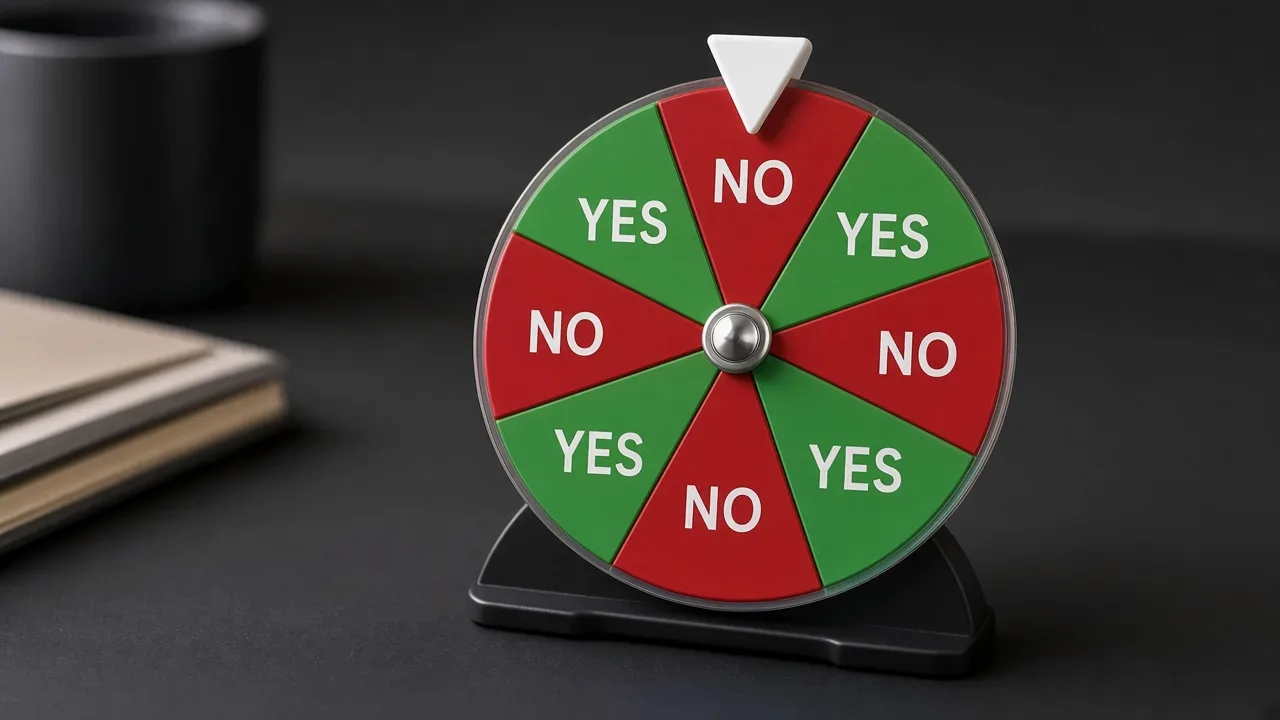

Say the question first. The wheel above is already a yes or no wheel, so leave the entries as they are.
Click the wheel once. Wait until it stops. The winner card shows Yes or No.
If you agreed on one spin, that is the answer. If you agreed on best of three, spin again until one side has two wins. Agree the rule before the first spin.
A yes or no wheel only works if Yes and No have the same chance. This one has four Yes slices and four No slices. Eight equal slices means each spin is 50/50. You can spin the sample as it is.
The list stays on this browser, separate from the wheel on the home page. Spinning here does not replace a class roster or a raffle you saved somewhere else.
On this default wheel, yes. The chance comes from the slices you can see, not from a hidden setting.
Count them. Four say Yes and four say No. Every slice is the same size, so Yes and No each cover half of the wheel.
The browser picks the winning slice with a cryptographic random value, then the wheel turns to it. Earlier spins are not remembered by the draw.
Playing until one side wins twice does not make a single spin more random. It only changes the game. Lock that rule in before anyone sees the first result.
Leave the list alone for a straight yes or no. Add the word Maybe only if you want a third answer, and give it the same number of lines as Yes and as No. One Maybe sitting next to four Yes and four No is not an equal three-way choice.
You can rename the slices if the two options are not the words Yes and No, for example Stay and Go. Keep the two labels equal in count if you still want a 50/50.